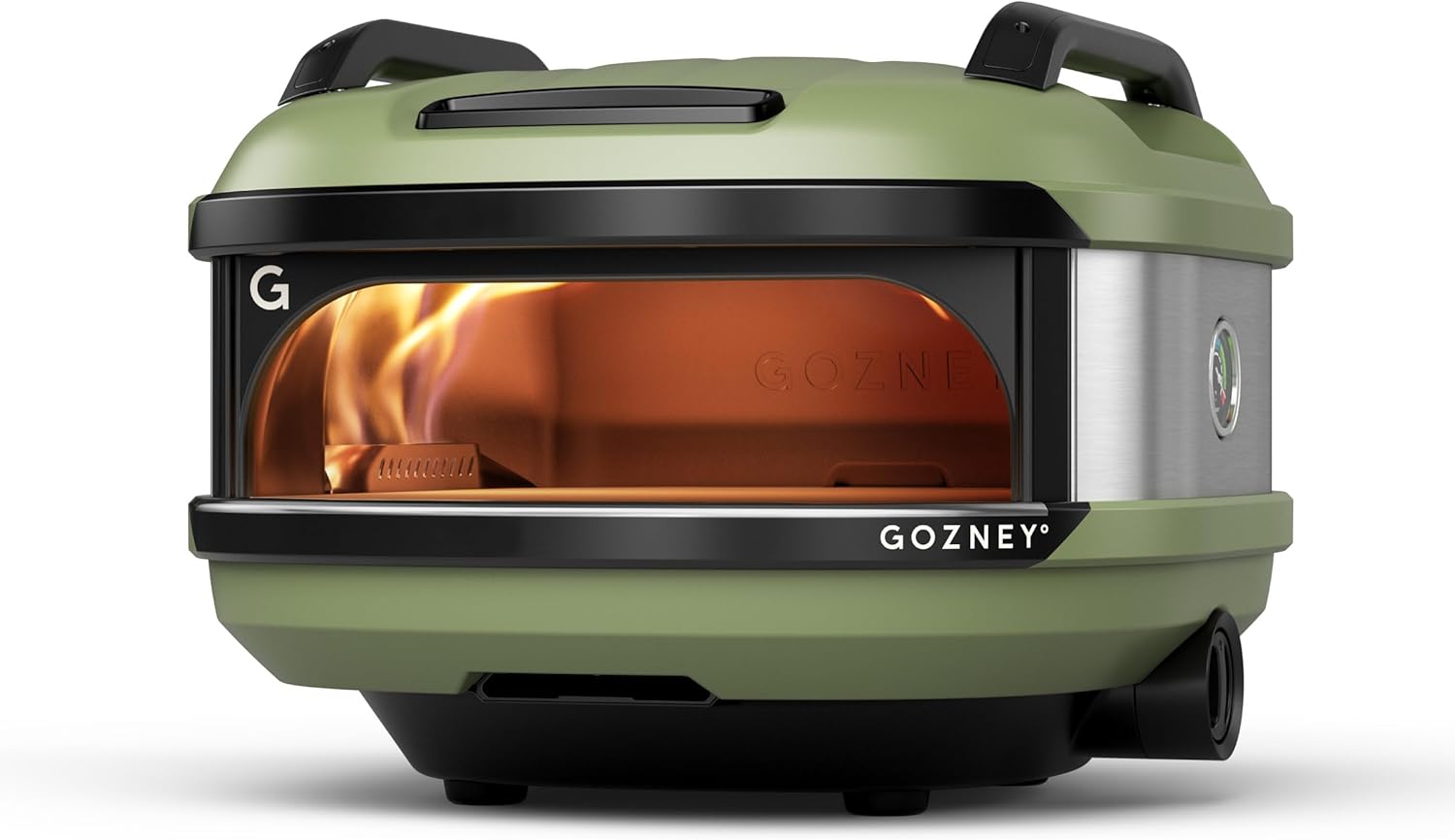
Baking sourdough bread in Gozney Dome requires three things: a saturated steam phase for the first 12 minutes, a hearth temperature of 480-500°F, and a dome ambient close to 550°F. The "steam injection trick" we use throughout 2026 is simple: preheat a cast iron skillet inside the chamber, then drop in five ice cubes the moment your loaf goes onto the stone. The trapped moisture mimics a professional deck oven, letting the crust stay pliable long enough for the dough to fully spring before the crust sets and seals. Below is the full workflow plus companion gear if your Dome is in a queue.
Why the Gozney Dome Excels at Sourdough
The Dome's 30mm cordierite stone, thick refractory ceiling, and rotating heat sources give bakers something most outdoor ovens cannot: controllable radiant balance. For pizza you want a 750°F dome to char a Neapolitan in 90 seconds. For sourdough you want the opposite — a long, even soak that pushes heat into the crumb without scorching the crust. The Dome's gas burner can be feathered down to a low blue flame, and the dual-fuel S1 chimney damper lets you trap moisture rather than vent it.

This is the crucial difference between baking sourdough bread in Gozney Dome versus a thin-walled portable pizza oven. The Dome holds latent heat for 30+ minutes after the burner cycles off, meaning your loaf finishes baking on stored energy — the same principle behind a wood-fired bakery's morning bread bake.
The Steam Injection Trick, Step by Step
You will need: a 6-inch cast iron skillet, 5-6 standard ice cubes, a parchment sling, an instant-read probe, and a peel. The trick assumes you are baking a 900g batard or a 1kg boule at 78% hydration.
- Preheat for 45 minutes. Run the gas burner on medium until the dome's built-in thermometer reads 575°F. Place the empty cast iron skillet on the stone, off-center, for the final 20 minutes so it superheats.
- Drop the burner to its lowest stable setting. Open the door and let the stone surface temperature settle to 490°F (verify with an IR gun — the built-in gauge measures dome, not hearth).
- Score and load. Slide the scored loaf onto the stone via parchment. Move quickly — every second open costs you 8-10°F of dome temp.
- Inject the steam. Immediately drop 5 ice cubes into the preheated skillet. They will flash-boil into a dense fog. Close the door fully and shut the chimney damper.
- Steam phase: 12 minutes. Do not open the door. The trapped vapor keeps the crust gelatinized and allows full oven spring.
- Crust phase: 18-22 minutes. Crack the chimney damper open. Rotate the loaf 180° at minute 20 to even out the wood-side hotspot if you are running hybrid fuel.
- Probe to 207°F internal. Pull, cool on a wire rack for at least 90 minutes before slicing.
Temperature Targets: Bread vs. Pizza
The Dome's owner's manual emphasizes pizza temps, so most new owners overshoot when they pivot to bread. Here is the cheat sheet I tape to the side of mine:
- Dome ambient at load: 550-575°F
- Stone surface at load: 485-500°F
- Dome ambient after steam phase: 480°F (drifting down)
- Total bake time: 32-38 minutes for a 900g loaf
- Internal crumb finish: 207°F probe
If your stone is reading above 510°F at load, the bottom will char before the spring completes. Pull the skillet, leave the door cracked for two minutes, then re-seat and try again. For more on stone calibration, see our pizza stone buyers guide for 2026.

Companion Ovens If Your Dome Is Backlogged
Gozney Dome lead times in mid-2026 are running 4-7 weeks for the S1 dual-fuel and longer for the wood-only. If you want to start practicing the steam-injection method now, several portable ovens can replicate the technique at smaller scale. None will hit Dome-level loaf volume, but each can produce a respectable 600-700g boule.
| Oven | Max Temp | Stone Diameter | Steam Trick Friendly? | Best For |
|---|---|---|---|---|
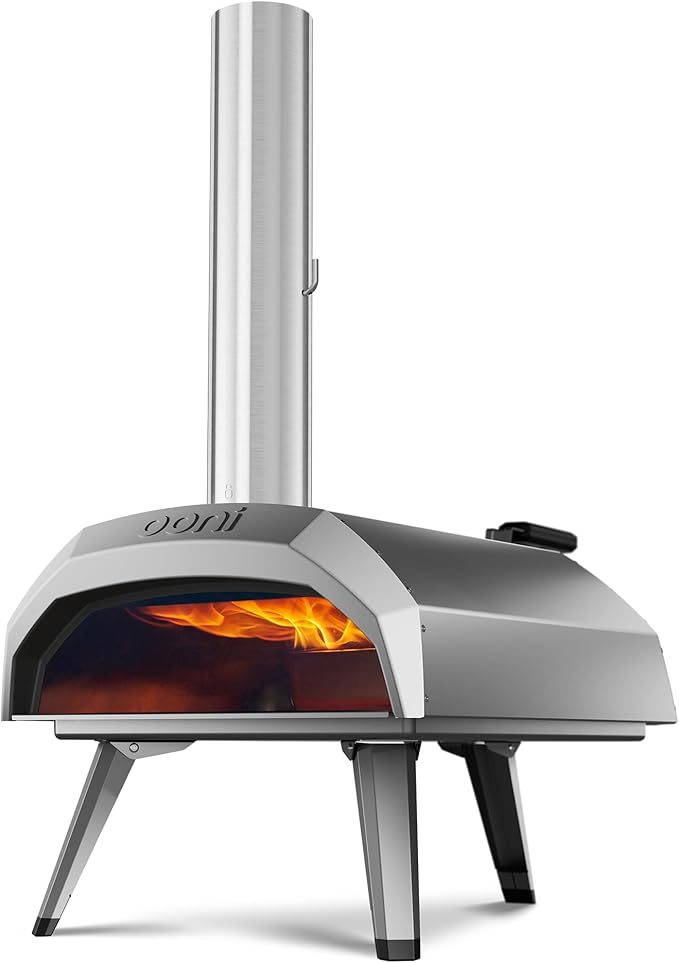
| Ooni Karu 12 | 950°F | 13.2 in | Yes (multi-fuel chamber) | Small batards, single boule |
| Ooni Koda 2 | 950°F | 14 in | Partial (gas only, no damper) | Pan loaves, focaccia |
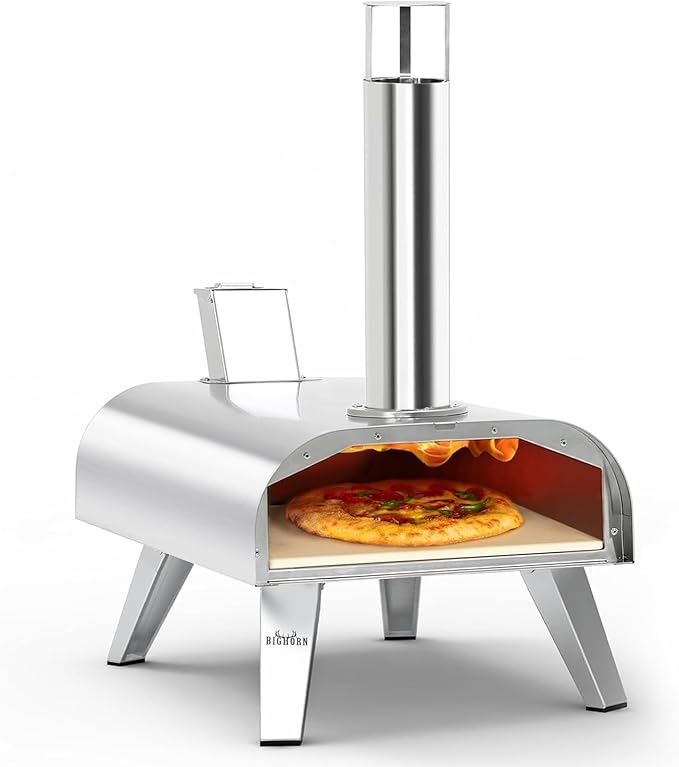
| BIG HORN 12-inch | 1110°F | 12 in | Yes (sealed door variant) | Budget testbed for the method |
| Stoke 16-Inch | 900°F | 16 in | Yes (larger chamber for skillet) | Full 900g boules |
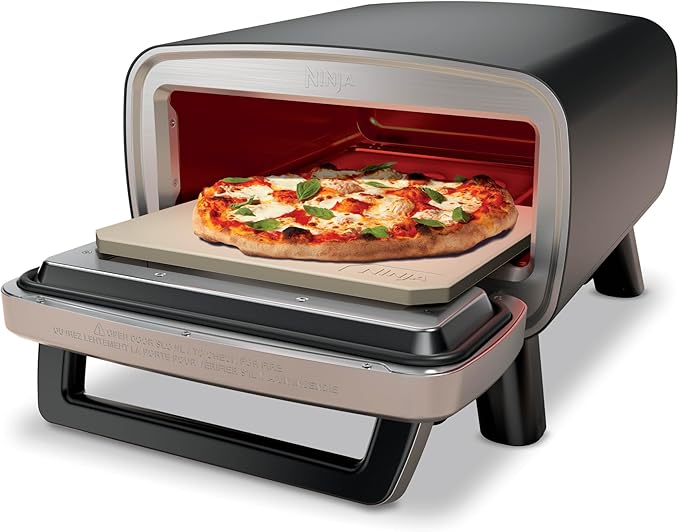
| Ninja Artisan Electric | 700°F | 12 in | No (electric, no damper) | Hands-off enriched doughs |
Best Multi-Fuel Stand-In: Ooni Karu 12
The Karu 12 is the closest spiritual cousin to the Gozney Dome at a fraction of the footprint. Its multi-fuel design lets you run gas for steady bread temps and switch to wood for finishing aroma. The chamber is just large enough to fit a 4-inch cast iron skillet beside a 700g boule, which is exactly what the steam injection trick needs. I have baked dozens of sourdough loaves in the Karu 12 while waiting for Dome restocks. Check the Ooni Karu 12 on Amazon.
Best Gas-Only Alternative: Ooni Koda 2
If you do not want to mess with wood, the Koda 2 gives you precision burner control closer to a kitchen oven. The 14-inch stone is roomy enough for a tin loaf or a flatter batard, and the burner profile can be dialed down low enough for the long bake sourdough needs. You give up the chimney damper, so steam dissipates faster — compensate with two ice-cube drops at the 4-minute mark. View the Ooni Koda 2 on Amazon.
Best Budget Practice Oven: BIG HORN 12-inch
Beginners destroying loaves while they learn the steam timing should not do it inside a $1,800 Dome. The BIG HORN 12-inch hits 1110°F, runs multi-fuel, and seals well enough to trap steam for the critical first phase. It is the oven I recommend for anyone wanting to dial in the steam-injection trick before committing to the Dome platform. See the BIG HORN 12-inch on Amazon.
Best for Full-Size Boules: Stoke 16-Inch
The Stoke's 16-inch chamber finally gives bread bakers room for a proper 900g boule plus a steam skillet on the side. Portability is its real edge — it tucks into a car for camping or tailgates, so you can bake fresh sourdough at a campsite. It does not reach Dome temperatures, but for bread you do not need it to. Check the Stoke 16-Inch on Amazon.
Best Hands-Off Alternative: Ninja Artisan Electric
If you want to bake bread without monitoring a fire, the Ninja Artisan's 700°F electric ceiling is plenty for sourdough. You cannot do the steam trick the same way — the chamber is too tight — but you can spritz the crust with a fine-mist bottle through the door slot at the 3-minute mark for a similar effect. Great for enriched doughs like brioche and milk bread. View the Ninja Artisan Electric on Amazon.
Common Mistakes With Sourdough in the Dome
After helping dozens of readers troubleshoot, these are the four failure modes I see repeatedly:
- Skipping the damper close. If you leave the chimney open during the steam phase, the vapor blows straight out and you get the same dry, pale crust as a kitchen oven without a Dutch oven.
- Loading on a too-hot stone. Pizza temps will scorch the bottom of a loaf in 90 seconds. Always verify stone temp with an IR gun, not the dome gauge.
- Using room-temperature water. Liquid water hits the skillet, sizzles, and evaporates within seconds. Ice cubes melt then boil, releasing steam over 4-6 minutes — perfectly matching the spring window.
- Opening the door early. Every peek during the steam phase costs you spring height. Set a timer and trust it.
For more troubleshooting on starter activity and fermentation in cooler 2026 outdoor temperatures, see our companion article on sourdough starter feeding schedules.
Hybrid Wood Finish (Optional)
Once you have the steam trick dialed in on gas, try a hybrid finish: ignite a small kindling bundle in the wood tray during the final 8 minutes of bake. The Dome's S1 design lets the wood smoke wash over the crust without spiking dome temperature past 600°F. The result is a faint, clean wood-smoke note in the crust that you cannot get from any indoor oven. This is also covered in our deeper guide to wood vs gas for artisan baking.

Frequently Asked Questions
Can I bake sourdough in the Gozney Dome without a Dutch oven?
Yes — that is the entire point of the steam injection trick. A Dutch oven creates its own steam chamber, but it also blocks the radiant heat that makes Dome bread special. The preheated cast iron skillet plus ice cubes plus closed damper recreates the Dutch oven environment for the first 12 minutes, then opens up to let radiant heat finish the crust. You get better ear definition and a more complex crust this way.
What hydration works best for sourdough bread in Gozney Dome?
78-82% hydration is the sweet spot. Below 75% the loaf does not get enough boost from the radiant heat. Above 84% the crumb structure cannot support itself before the crust sets, so you get a flat loaf. If you are using high-protein bread flour like Central Milling Artisan Bakers Craft, push to 80%. With grocery-store King Arthur bread flour, stay closer to 76%.
How long does the Gozney Dome stay hot enough for back-to-back loaves?
One full gas preheat will support three loaves baked back to back. After loaf one, run the burner on medium for 8 minutes to recover stone temp. After loaf two, 10 minutes. By loaf four the thermal mass starts to drift and you need a fresh 20-minute reheat. Plan family bread day for three loaves per session.
Do I need to flour the stone or use parchment?
Parchment for the first 12 minutes. Standard parchment is rated to 425°F but holds up briefly at higher temps if it is shielded by dough on top and steam below. At the 12-minute damper-open mark, slide the parchment out with tongs and let the loaf finish directly on the stone. Pure semolina dusting also works but tends to scorch and impart a bitter note in the Dome's high heat.
Why is my crust splitting on the bottom instead of the score line?
Stone is too hot at load. The bottom crust sets before the score has a chance to open, so steam escapes through the path of least resistance — which is the bottom edge where the dough meets the parchment. Drop your stone target to 480°F and re-test. You can also score deeper (about 1cm) at a 30-degree angle to encourage proper expansion.
Can the same steam trick work in the Ooni Karu 16 or Gozney Arc?
Yes, with adjustments. The Karu 16 has a slightly shorter dome, so use a 5-inch skillet instead of 6-inch to leave headroom for spring. The Gozney Arc XL behaves nearly identically to the Dome for bread — same damper, similar stone mass — but you give up the wood option. Owners of either can use the same temperature targets listed above.
Is the Gozney Dome worth it just for sourdough?
If sourdough is your only use case, no — a quality Dutch oven and a good home oven will get you 90% of the way for a tenth of the price. The Dome justifies itself when you want to bake bread, fire pizzas at 900°F, slow-roast meat, and do live-fire vegetables in the same session. For pizza-first households who also want serious bread capability, it is the best single oven on the market in 2026.
Key Takeaways
- Choosing the right sourdough bread in gozney dome means matching capacity and output ports to your actual devices
- Always check actual watt-hours (Wh), not just watts — runtime depends on Wh, not peak output
- Also covers: gozney dome sourdough loaf
- Also covers: steam injection gozney dome bread
- Also covers: baking artisan bread in gozney
- Compare price-per-Wh across models to find the best value for your budget