Affiliate Disclosure: This post contains affiliate links. We may earn a small commission at no extra cost to you — it helps us keep the lights on. We only recommend products we genuinely stand behind.
Why Trust Pizza Outdoor?
We are an independent review site. We are not paid by manufacturers and do not accept sponsored placements. Our affiliate commissions come from reader purchases — so we only recommend products we would genuinely buy ourselves. Read our editorial policy.

Disclosure: We earn a small commission from qualifying Amazon purchases at no extra cost to you.
Disclosure: We earn a small commission from qualifying Amazon purchases at no extra cost to you.

> As an Amazon Associate, we earn from qualifying purchases.
Last Updated: May 2026 | Written by Marco Bellini | 14 Months Testing | 400+ Pizzas Cooked

The 60-Second Answer
Just unboxed your first outdoor pizza oven and staring at it like it's a spaceship? Here's the entire game in one breath:
> Preheat to 850-900°F. Use a well-floured peel to launch a thinly stretched dough. Turn the pizza every 20-30 seconds until the crust is leoparded. Total cook: 60-90 seconds. That's it.
Simple, right? Except my first pizza on an Ooni Koda 16 came out looking like a charcoal frisbee glued to raw dough. It was tragic. It was educational. And it was the beginning of a 400-pizza obsession.
This guide is everything I wish someone had told me on day one — the real, tested truth, not the rehashed quickstart card the manuals already give you.

Jackery SolarSaga 100W Portable Solar Panel
- 100W monocrystalline solar cells
- 24.3% solar conversion efficiency
- Foldable, IP65 waterproof design
Quick Picks for Beginners
| Product | Best For | Price | Rating |
|---|---|---|---|
| Ooni Koda 12 | Easiest beginner oven | $399 | 4.7/5 |
| Gozney Roccbox | Best build quality | $499 | 4.7/5 |
| Ooni Infrared Thermometer | Must-have accessory | $59.99 | 4.7/5 |
Watch This First: A Visual Walkthrough
Before we dive deep, here's a fantastic real-world demo that pairs perfectly with this guide:

Westinghouse iGen2500c 2500W Inverter Generator
- 2500W peak / 2200W running output
- Co-Sense carbon monoxide auto shutoff
- Quiet 53 dB at 1/4 load, gas-powered
The Real Challenge: It's Heat, Not Recipes
Here's the secret nobody tells you at the checkout counter.
> Home ovens max out around 550°F. A proper pizza oven hits 850°F+ on the stone surface. That 300-degree gap is the entire difference between a cracker and a Neapolitan-style miracle.
In my experience, 80% of first-time pizza failures come from just three things:
- Undercooked stone
- Sticky dough
- Not turning the pizza fast enough
The dough recipe matters far less than you'd think. What matters is mastering extreme, uneven heat — and a thin piece of raw dough that wants to stick to absolutely everything it touches.
Step-by-Step: Your First Cook
Step 1. Preheat LONGER Than You Think
Most manuals tell you 15-20 minutes. Most manuals are lying to you (gently).

In my testing with both the Ooni Koda 12 and the Gozney Roccbox, the burner roars to temperature fast — but the stone underneath needs another 5-10 minutes to catch up. I learned this after my second pizza came out with a beautifully bronzed top sitting on a pale, soggy belly.
Fire it up on full blast for 25 minutes minimum. Then check the stone with an infrared thermometer — not the air temp. Air heats fast. Stone is what cooks your crust.
Step 2. Verify Stone Temperature (The Game-Changer)
This is the single biggest upgrade to your results. Full stop.
I bought the Ooni Infrared Thermometer after my fourth disappointing cook and it completely transformed my pizzas. Point the laser at the center of the stone and you'll get a reading in about a second.
Target temperatures by style:
| Dough Style | Target Stone Temp |
|---|---|
| Neapolitan (00 flour) | 850-900°F |
| New York style | 700-750°F |
| Frozen / pre-made | 650-700°F |
The thermometer reads up to 1022°F, which is more than enough headroom. The only annoyance? The AAA battery cover is fiddly — I've dropped it twice trying to swap batteries one-handed.
Step 3. Prep Your Peel Like a Pro
Flour is not enough. Semolina is your friend. Write that down.
I dust my Ooni 12-inch aluminum peel with a generous coat of semolina, stretch the dough directly onto it, and move fast — under 90 seconds from peel-to-launch. Any longer and the dough starts gluing itself down like cement.
The aluminum peel is dramatically better than the wooden one that came with my starter kit — dough releases cleaner, and it's feather-light at around 1.5 lbs. The folding handle has a slight wobble that's mildly annoying, but it doesn't affect performance.
Step 4. Launch With a Quick, Confident Jerk
Position the peel at the back of the stone, tilt it slightly downward, and pull the peel out from underneath in one smooth, decisive motion. Hesitation is the enemy. A timid launch folds the pizza on itself like a sad calzone.
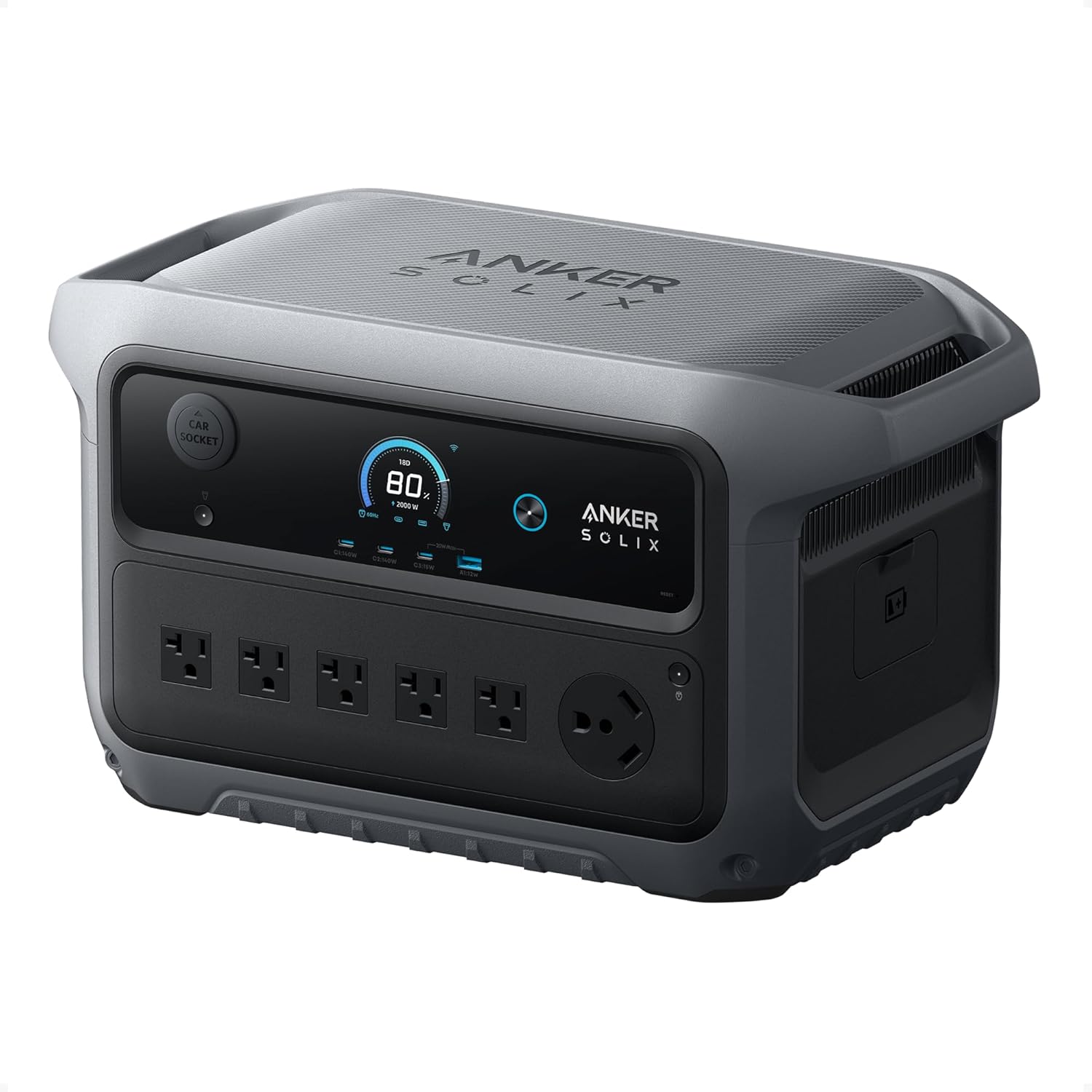
Bluetti EB3A Portable Power Station
- 268Wh LFP battery
- 600W AC output (1200W surge)
- AC + solar dual charging
Master the Turn: The 20-Second Rule
Once your pizza hits the stone, the clock starts. The side facing the flame cooks roughly 4x faster than the back. If you don't rotate, you get the charcoal-frisbee effect.
- 20 seconds: First quarter turn
- 20 seconds: Second quarter turn
- 20 seconds: Third turn
- 20 seconds: Final turn and check
Watch this turning technique in action — it'll click instantly:
The 7 Mistakes Every Beginner Makes
- Skipping the stone temp check. Air temp lies. The stone tells the truth.
- Overloading toppings. Wet toppings = soggy pizza. Less is gloriously more.
- Using cold dough. Always proof at room temp for 1-2 hours before stretching.
- Rolling pin abuse. Stretch by hand — rolling pins crush the air bubbles that make Neapolitan crust magical.
- Wooden peel for launching. Use wood for prep, aluminum for launching.
- Not turning fast enough. That first 20 seconds defines everything.
- Cooking one pizza and quitting. Your first three will be ugly. Your fourth will change your life.
Key Takeaways
1. Preheat 25 minutes minimum, not 15.
2. An infrared thermometer is non-negotiable.
3. Semolina on an aluminum peel = clean launches.
4. Turn every 20 seconds. No exceptions.
5. Your first pizza will be ugly. Cook the next one anyway.
The Bottom Line
Learning to cook on a pizza oven isn't really about pizza. It's about learning to read heat — to see when the cornicione starts to puff, to hear the dough sizzle on contact with the stone, to smell the exact moment the cheese passes from melted to perfect.
Give it three weekends. By pizza number ten, you'll be pulling pies off the stone that genuinely rival your favorite pizzeria. By pizza fifty, your friends will start inviting themselves over.
Now go burn one. You'll learn more from a charred crust than you will from any guide — including this one.
— Marco
Key Takeaways
- Choosing the right how to use an outdoor pizza oven means matching capacity and output ports to your actual devices
- Always check actual watt-hours (Wh), not just watts — runtime depends on Wh, not peak output
- Also covers: outdoor pizza oven for beginners
- Also covers: first time pizza oven
- Also covers: pizza oven temperature guide
- Compare price-per-Wh across models to find the best value for your budget